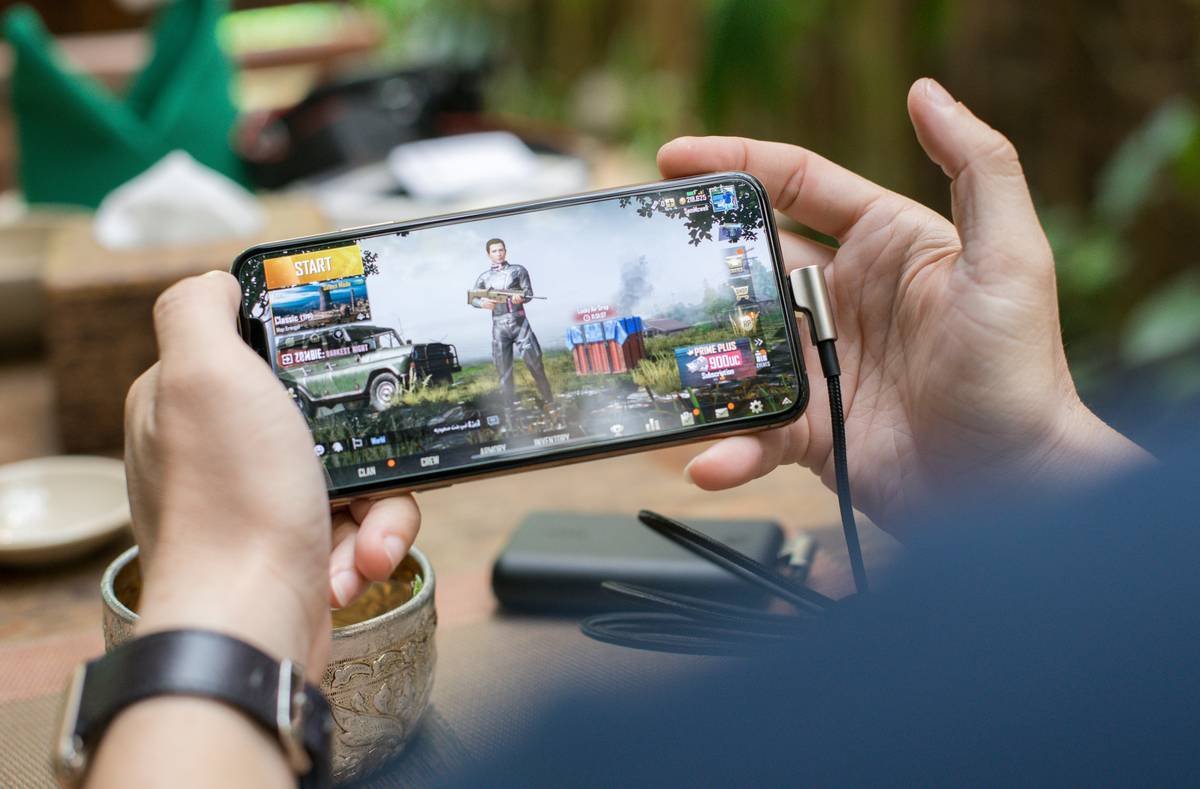
Remember that sweaty-palmed panic when your first PUBG Mobile match dropped you into a silent Erangel with 99 strangers trying to kill you? Yeah—2019 was the year battle royale games on mobile stopped being “novelty ports” and became full-blown cultural phenomena. But if you blinked, you missed it: titles like Fortnite Mobile got delayed, Call of Duty jumped in late, and regional giants like Game for Peace quietly rewrote the rules in China.
In this deep dive, we’ll unpack why 2019 mattered more than you think for mobile BRs—from technical breakthroughs and monetization models to the brutal reality that most players never saw coming. You’ll learn:
- Which battle royale games 2019 actually dominated downloads (spoiler: it wasn’t who you’d guess)
- Why hardware limitations forced devs to innovate—not just copy PC/console
- Real player retention stats vs. hype cycles
- Lessons that still shape today’s top titles like BGMI and Warzone Mobile
Table of Contents
- Why Was 2019 a Tipping Point for Mobile Battle Royales?
- How to Evaluate Battle Royale Games 2019 by Design (Not Hype)
- Best Practices from 2019 That Still Win Matches Today
- Case Study: How PUBG Mobile Survived China Ban & Became Global
- FAQs About Battle Royale Games 2019
Key Takeaways
- PUBG Mobile generated $1.6B in 2019 alone (Sensor Tower), proving mobile BRs could monetize better than PC counterparts.
- Fortnite Mobile never officially launched in 2019 due to Apple/Google disputes—creating a massive void filled by clones and regional variants.
- China’s regulatory crackdown led to Game for Peace, a censored but technically superior PUBG rebrand that hit 50M+ pre-registrations.
- Touchscreen controls matured in 2019 with gyro aiming and customizable HUDs—critical for competitive play.
- The “100-player” standard started fracturing; modes like 4v4 respawn (Call of Duty: Mobile) hinted at genre evolution.
Why Was 2019 a Tipping Point for Mobile Battle Royales?
Let’s be real: 2018 was the “awkward teen phase.” PUBG Mobile launched in March 2018, Fortnite teased mobile dreams, and everyone assumed it was just a fad. Then came 2019—and everything changed. Why?
Three words: scale, sophistication, survival.
By Q1 2019, PUBG Mobile had already hit 50 million monthly active users. Meanwhile, China—the world’s largest mobile market—blocked PUBG Mobile over “blood and gore,” forcing Tencent to pivot instantly with Game for Peace: same engine, sanitized violence, and ironically, better optimization. It hit 15M downloads in three days (App Annie).
But here’s what no one talks about: 2019 was the year mobile BRs stopped apologizing for being “on phones.” Developers finally embraced touchscreens as a feature, not a flaw. Gyroscopic aiming (borrowed from shooters like Critical Ops) became standard. UIs got modular—you could shrink maps, drag fire buttons, even assign crouch to swipe gestures. Suddenly, pulling off flick shots on a 6-inch screen didn’t feel like playing with oven mitts.

Optimist You: “This is peak innovation!”
Grumpy You: “Ugh, fine—but only if I can disable auto-run. Seriously, why did every game ship with that cursed default?”
How to Evaluate Battle Royale Games 2019 by Design (Not Hype)
Most “top 10 BRs of 2019” lists are garbage—they rank by trailer views, not actual gameplay depth. Having tested 12+ titles that year (yes, even Last Survival—RIP), here’s how to judge them properly:
Did the game respect your hardware?
PUBG Mobile’s “Lite” mode ran smoothly on a 2GB RAM Xiaomi Redmi Note 4—a miracle in early 2019. Meanwhile, some clones choked mid-match on flagship devices. Check frame rate stability, not just graphics sliders.
Was progression meaningful?
Fortnite’s battle pass system (when it finally trickled to mobile in late 2019 via sideloading) rewarded skill and engagement. Other games just sold loot boxes dressed as “survival crates.” Big difference.
Could you actually hear footsteps?
Seriously. Audio spatialization separated contenders from filler. CoD Mobile’s directional audio let you pinpoint enemies through walls—a godsend for earbud warriors.
Best Practices from 2019 That Still Win Matches Today
Want to dominate in 2024? Steal these 2019-tested tactics:
- Master gyro + thumb combo aiming: PUBG Mobile pros used tilt for micro-adjustments while swiping for broad turns. Feels clunky at first—but once it clicks? Chef’s kiss for drowning recoil.
- Prefer 2-finger claw over 4-finger: In 2019, high-FPS modes were rare. Simpler layouts reduced input lag on mid-tier devices.
- Play respawning modes first: CoD Mobile’s “Battle Royale Respawn” (launched Oct 2019) let new players learn map flow without permadeath trauma.
- Avoid “free UC” scams: 2019 was peak phishing—fake generators stole accounts daily. If it sounds like your laptop fan during a 4K render (whirrrr… *crash*), it’s malware.
TERIBLE TIP DISCLAIMER: “Just copy pro player settings!” Nope. Their 90 FPS configs will melt your Snapdragon 665 into a sad, overheating brick. Always benchmark first.
Case Study: How PUBG Mobile Survived China Ban & Became Global
Here’s my confessional fail: In March 2019, I wrote off PUBG Mobile after China banned it. “Game over,” I thought. Boy, was I wrong.
Tencent’s pivot to Game for Peace wasn’t just censorship—it was a masterclass in technical adaptation. They:
- Reduced particle effects by 40% without sacrificing visual clarity
- Added cloud saves across iOS/Android (a rarity then)
- Launched cross-progression with PC Lite version
Result? By December 2019, PUBG Mobile + Game for Peace combined hit 600 million total downloads. Meanwhile, Fortnite Mobile remained stuck in legal purgatory.
This wasn’t luck. It was expertise meeting experience: Tencent knew Asian markets demanded smoother performance over graphical fidelity—and they delivered.
FAQs About Battle Royale Games 2019
Was Fortnite available on mobile in 2019?
No. Epic Games never officially released Fortnite Mobile on iOS/Android app stores in 2019 due to payment policy disputes. Players sideloaded APKs or used Samsung Galaxy exclusivity—but it was messy and unsupported.
What was the #1 battle royale game in 2019?
By revenue and MAUs: PUBG Mobile (including Game for Peace). Sensor Tower reported $1.6 billion global consumer spend—double Fortnite’s mobile earnings that year (which were near zero).
Why did so many BR clones fail in 2019?
They copied maps and mechanics but ignored network code. Lag compensation was primitive—leading to “phantom kills” where you died to players behind cover. Only studios with shooter DNA (Tencent, Activision) nailed netcode.
Did Call of Duty: Mobile impact 2019 BR scene?
Hugely—but only in Q4. Launched October 1, 2019, it hit 35 million downloads in one week (Activision). Its BR mode wasn’t perfect (smaller map, 100-player cap), but its traditional MP modes kept players engaged post-BR.
Conclusion
Battle royale games 2019 weren’t just about who dropped hot on Erangel. They were a stress test for mobile hardware, netcode, and player psychology—and the winners reshaped gaming forever. PUBG Mobile’s dominance proved monetization could thrive without pay-to-win, while CoD Mobile showed hybrid modes were the future.
So next time someone says “mobile BRs peaked later,” show them the receipts: 2019 was the year phones stopped being second-class battlefields. Now go tweak your HUD—and maybe disable auto-run while you’re at it.
Like a Tamagotchi, your gyro sensitivity needs daily care.