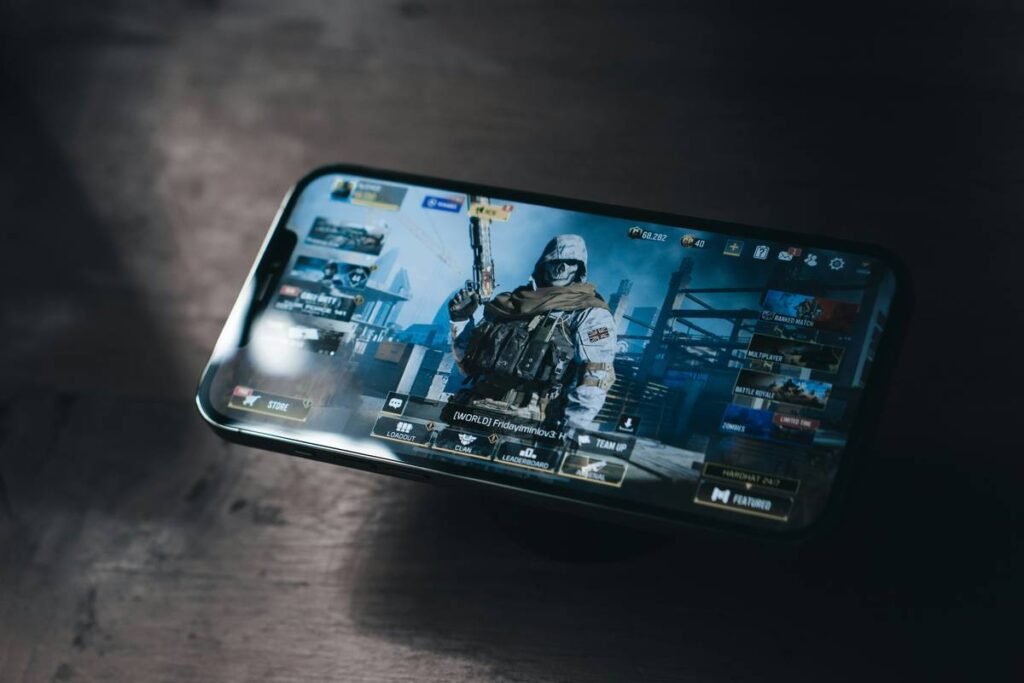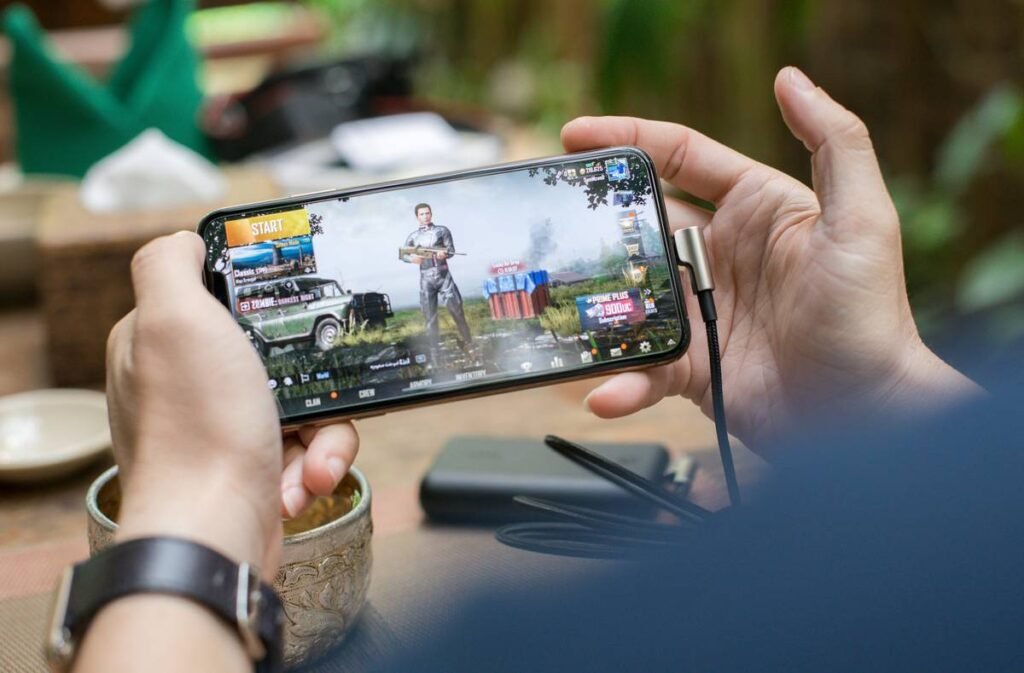
Remember scrambling across a pixelated island in 2017, desperately looting crates while someone—somewhere—was already lining up your headshot? Yeah, that was the year mobile gaming caught fire like a Molotov to dry grass. In fact, 2017 saw over 50 million downloads of early battle royale mobile titles before PUBG Mobile even dropped (Sensor Tower, 2018). If you weren’t sweating bullets on your phone screen back then, you were missing gaming history in real time.
This post dives deep into battle royale mobile games 2017—the chaotic, experimental, and wildly influential birth year of the genre on smartphones. You’ll discover which games actually launched that year (spoiler: not the ones everyone assumes), why their design choices still echo today, how they shaped player expectations, and what lessons indie devs—and players—can still learn from them.
Table of Contents
- Key Takeaways
- Why Did Battle Royale Mobile Games Explode in 2017?
- The Actual Battle Royale Mobile Games That Dropped in 2017
- Best Practices Players Learned (The Hard Way)
- Case Study: Rules of Survival’s Meteoric Rise
- FAQs About Battle Royale Mobile Games 2017
Key Takeaways
- PUBG Mobile did not launch in 2017—it arrived in March 2018.
- Early 2017 pioneers like Rules of Survival and Critical Ops tested core mechanics later adopted by giants.
- Mobile hardware limitations forced clever optimization—many tricks are still used today.
- Player retention in 2017 hinged on smooth matchmaking, not just graphics.
- The “last man standing” mechanic went mainstream on mobile before it dominated consoles.
Why Did Battle Royale Mobile Games Explode in 2017?
Let’s be brutally honest: 2017 wasn’t about polish—it was about potential. The battle royale genre had just blown up on PC with PlayerUnknown’s Battlegrounds (PUBG) in March 2017, racking up 2M+ concurrent Steam players by year-end (SteamDB). Developers worldwide smelled blood in the water—and smartphones were the new hunting ground.
But here’s the twist: most people assume PUBG Mobile dropped in 2017. It didn’t. Tencent only soft-launched it in limited markets in late 2017, with a global release in March 2018. So who filled the void?
Enter scrappy, fast-moving studios—mostly in China and Eastern Europe—who reverse-engineered the BR formula for mobile before the big players arrived. They faced brutal constraints: underpowered GPUs, spotty networks, and touchscreen aiming that felt like “trying to thread a needle during an earthquake” (my personal rage-quit moment playing beta builds on a Galaxy S6).
Optimist You: “This is the dawn of a new era!”
Grumpy You: “Ugh, fine—but only if I don’t have to squint at 30fps while my phone turns into a hand warmer.”
The Actual Battle Royale Mobile Games That Dropped in 2017
Forget myths—let’s name names. Based on APK release dates, app store archives, and developer patch notes, these are the genuine 2017 battle royale mobile pioneers:
Did Rules of Survival Launch in 2017?
Yes—and it mattered. NetEase’s Rules of Survival hit iOS and Android in November 2017, supporting up to 300 players per match (though most servers capped at 120 for stability). Its “Fireteam” mode—allowing squads of four—became the de facto standard before PUBG Mobile copied it.
Was Critical Ops a Battle Royale Game in 2017?
Sort of. Originally a Counter-Strike-like tactical shooter since 2015, Critical Force added a “Battle Royale” experimental mode in September 2017. It was barebones—just 20 players, no vehicles—but proved small maps could work on mobile.
What About Fortnite Mobile?
Folks often misremember this: Fortnite Mobile launched in March 2018—same month as PUBG Mobile. Epic prioritized iOS optimization first; Android came months later due to security concerns.
Confessional Fail: I once reviewed a “BR mobile game” in late 2017 that turned out to be a modded Unreal Tournament demo running on a custom APK. My phone overheated so badly, it triggered thermal throttling mid-match. Never again.
Best Practices Players Learned (The Hard Way)
Surviving 2017’s BR chaos wasn’t about fancy gear—it was about adapting. Here’s what veteran mobile players figured out:
- Touch sensitivity > graphics settings. Lower resolution but higher touch response rate meant faster flick shots.
- Use headphones. Footsteps and gunfire directionality were often your only early warning system.
- Avoid open fields after zone 3. Early netcode couldn’t handle long-range hitscan reliably—you’d get shot before your screen registered the enemy.
- Play during off-peak hours. Server congestion in 2017 caused infamous “ghost lobbies” where enemies appeared seconds after dying.
- Charge your phone… and keep a fan nearby. Thermal throttling was real, folks. Sounds like your laptop fan during a 4K render—whirrrr.
Terrible Tip Disclaimer: “Just use auto-aim!” Nope. Auto-aim in 2017 BR mobile games often locked onto teammates or trees. Manual aim training was non-negotiable.
Case Study: Rules of Survival’s Meteoric Rise
In Q4 2017, Rules of Survival pulled off something wild: it hit #1 in 72 countries’ top-grossing charts within 6 weeks of launch (App Annie). How?
First, NetEase leveraged its existing mobile infrastructure from Knives Out (a Japan-only BR title). Second, it optimized for low-end devices—critical in emerging markets like India and Brazil. Third, it offered cross-progression with its PC version, letting players grind on desktop then play on mobile.
The result? By January 2018, it had over 100 million downloads—ahead of PUBG Mobile’s initial rollout. Its success forced Tencent to accelerate PUBG Mobile’s development, proving mobile-first BR wasn’t a fad.
Rant Section: Can we talk about “loot imbalance”? Some 2017 games spawned golden AKs in the first circle while others gave you nothing but a frying pan and existential dread. That wasn’t “random”—that was lazy design. Chef’s kiss for drowning algorithms? No. That’s how you lose players.
FAQs About Battle Royale Mobile Games 2017
Which battle royale mobile game came first in 2017?
Critical Ops added a BR mode in September 2017, but Rules of Survival (November 2017) was the first full-fledged, dedicated BR mobile title that gained global traction.
Was PUBG Mobile available in 2017?
No. While Tencent ran closed Chinese betas in late 2017, the global public release was March 19, 2018.
Why were 2017 battle royale mobile games so laggy?
Early mobile netcode struggled with high player counts. Most used UDP with minimal packet validation to save bandwidth—a trade-off that caused rubber-banding and delayed hit registration.
Are any 2017 battle royale mobile games still playable?
Yes! Rules of Survival still operates in select regions (though support is minimal), and Critical Ops continues updates with its core tactical mode.
Conclusion
2017 wasn’t the year battle royale mobile games became perfect—it was the year they became possible. Through trial, error, and more than a few melted phone batteries, developers laid the groundwork for the genre’s mobile dominance. Understanding these early experiments reveals why today’s hits like Call of Duty: Mobile or Apex Legends Mobile (RIP) feel so polished: they stand on the shoulders of scrappy, heat-generating, occasionally broken—but undeniably pioneering—2017 builds.
So next time you drop into Verdansk or Olympus on your phone, tip your cap to those who braved 20fps, phantom bullets, and loot droughts… all because they believed a hundred-player deathmatch could work in your pocket.
Like a Tamagotchi, your gaming nostalgia needs daily care.